Laura Wiegand-Smith
Laura Wiegand-Smith
Services
Web Design
Software Design
Web Audits
About
Work
About me
Legal
Privacy Policy
Sitemap
Copyright 2026 All Rights Reserved
Website created by Laura Wiegand-Smith
The Outcome
WAERInsights fundamentally changed how the company approached warehouse analytics. Instead of continually building bespoke reporting tools, I introduced a configurable platform capable of supporting hundreds of different warehouse operations through a single scalable product.
The project delivered organisational impact beyond the interface itself.
Established a reusable analytics framework adopted across future WAER software.
Reduced engineering dependency on bespoke dashboard development.
Replaced fragmented reporting with a configurable, customer-owned analytics experience.
Embedded customer co-design into the product development process through the Innovation Programme.
Created the design system and UI standards that became the baseline for future software and branding across the company.




Product Strategy
Instead of designing another fixed reporting dashboard, I reframed WAERInsights as a configurable analytics platform.
Core strategy principles:
Standardise where customer needs overlapped.
Enable configuration where warehouse operations differed.
Reduce reliance on bespoke engineering.
Help customers interpret operational data rather than simply display it.
WAER Systems
WAERInsights
Sector: Warehouse Management
Platform: B2B SaaS
Designing WAERInsights
Configurable analytics
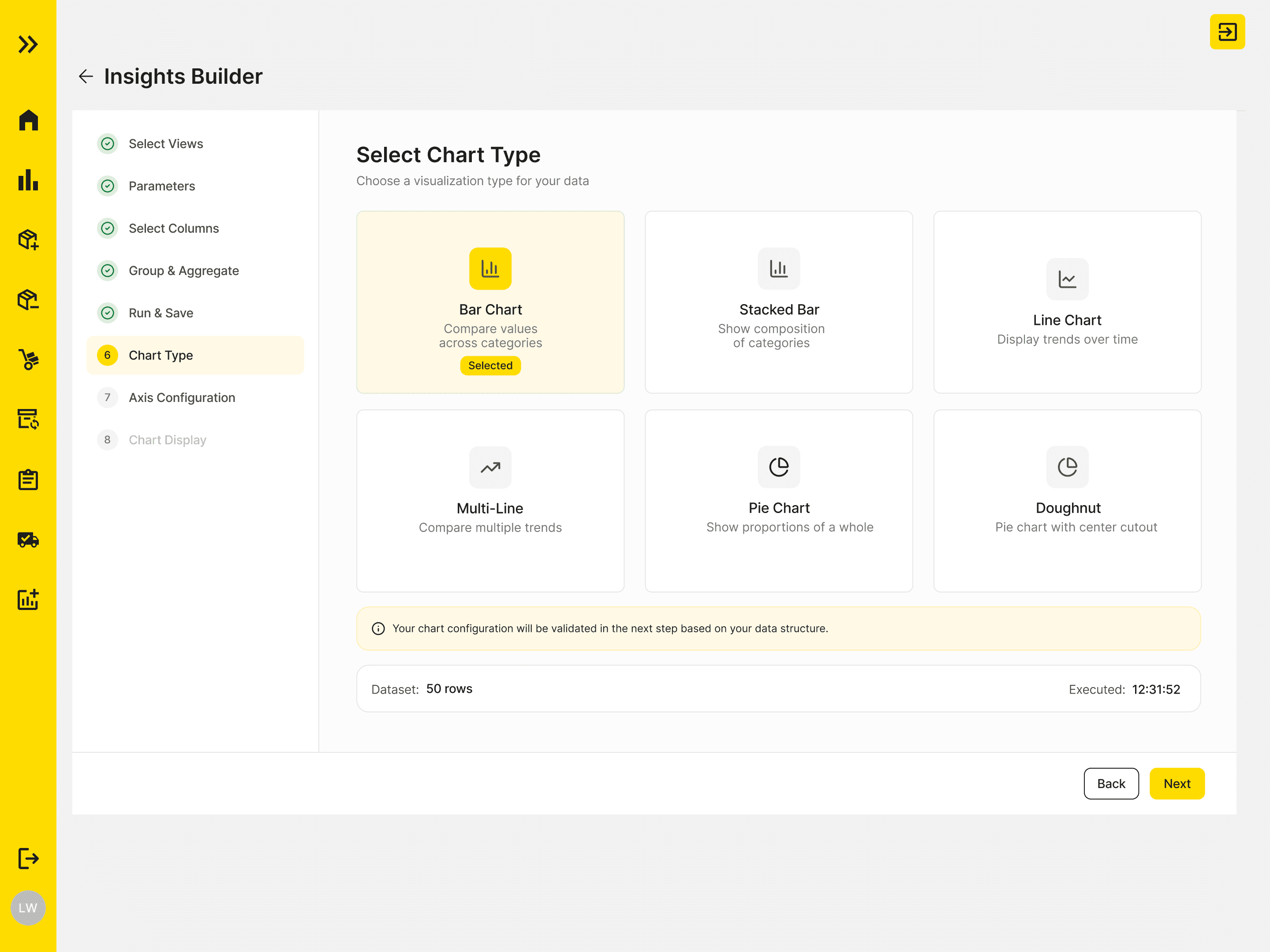
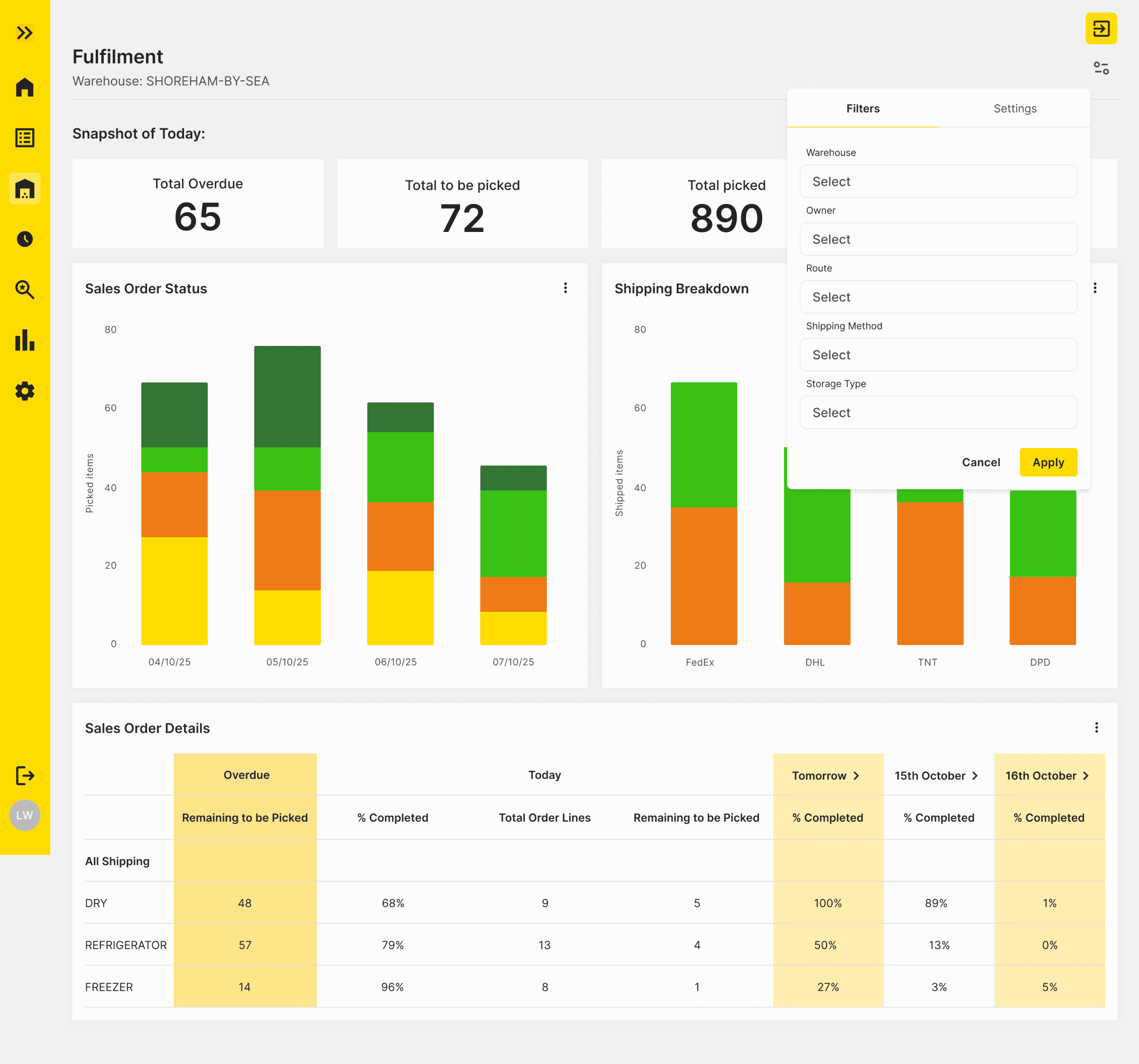
Working alongside Product, I defined a standard set of KPI dashboard included within the platform while designing a bespoke tool called Insights Builder. This tool acted as a self-service dashboard builder that allowed customers to create bespoke dashboards using live warehouse data. Rather than requesting custom development, customers could configure analytics around their own warehouse operations.
Impact:
Reduced reliance on bespoke feature requests.
Increased customer autonomy.
Created a scalable product model that supported different warehouse operations without creating different products.


Customer co-design
To rebuild trust with customers, I introduced an Innovation Programme that invited more than 200 customers to participate throughout the design process. Rather than validating designs after development, customers became active contributors during research, ideation and prototyping. While this was risky, it allowed me to iterate designs faster.
Impact:
Continuous validation throughout design.
Faster iteration before engineering investment.
Stronger customer relationships through shared ownership.

Scalable design system
The flexibility of WAERInsights required a design system capable of supporting both standard dashboards and customer-generated layouts.
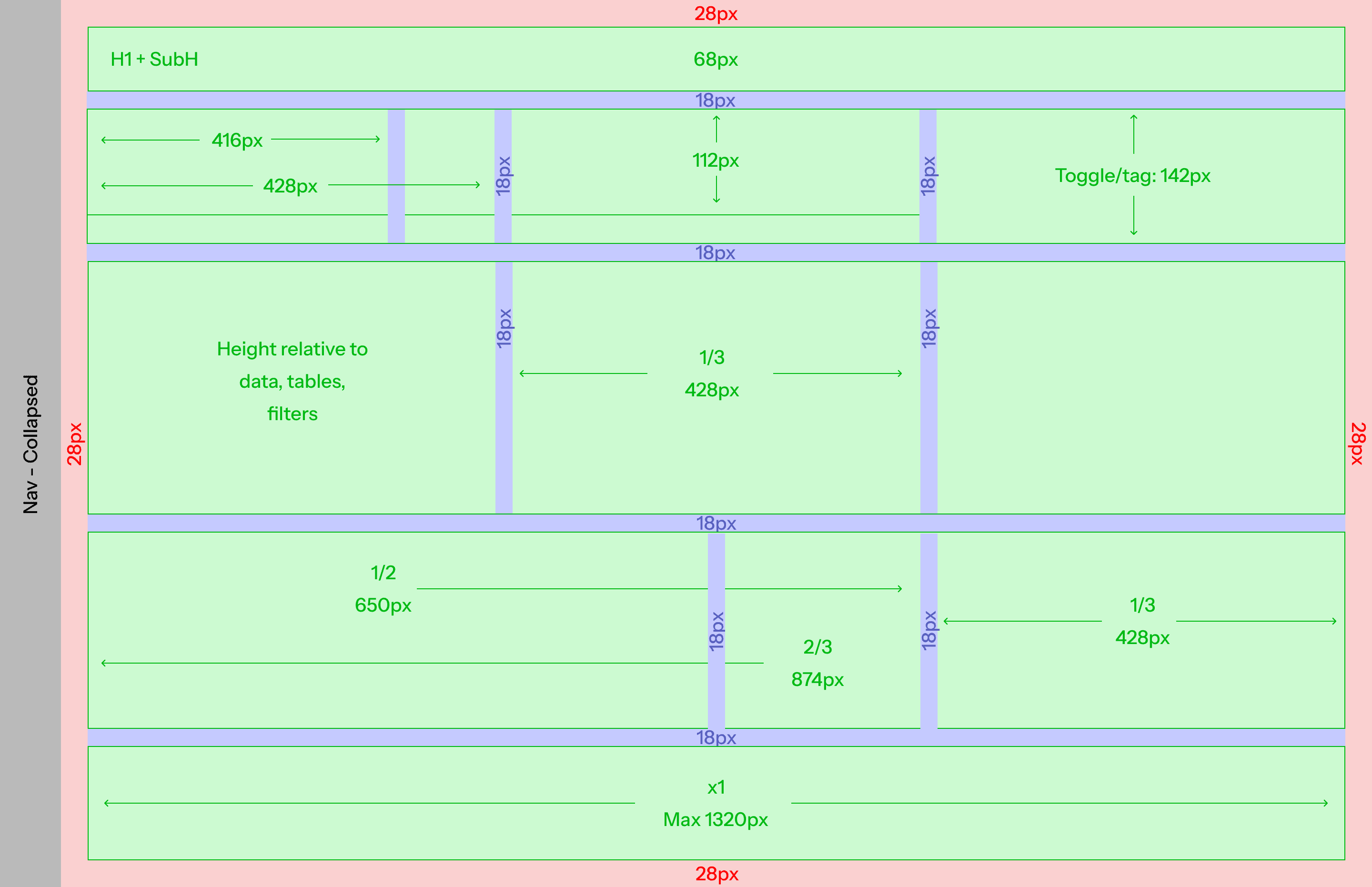
Working closely with the development team, I established a responsive dashboard framework, reusable component library and mathematical grid system that ensured every dashboard remained visually consistent regardless of content or screen size. This framework became the foundation for both WAERInsights and future software across the organisation.

The Challenge
WAER's analytics platform had evolved into a collection of bespoke customer requests rather than a scalable product. As every warehouse operated differently, development teams were continually building one-off dashboards while customers struggled to turn operational data into meaningful decisions.
As a result:
Customers lost confidence as reports were difficult to interpret and failed to reflect how individual warehouses operated.
Warehouse managers created their own reporting tools, investing personal time building KPI software outside the platform.
Engineering became trapped in bespoke development, increasing maintenance, technical debt and pressure on Customer Support.
My core challenge evolved into redesigning how warehouse analytics could scale across hundreds of unique operations.
UX/UI
Software Design
Design System
Warehouse Operation Managers need real-time visibility on the floor by the time a drop in productivity gets noticed, the financial damage is already done. WAERInsights is a robust analytics platform that provides a single source of truth, allowing managers to track operations, compare performance, and forecast intelligently.
I led the UX/UI design of this new platform, turning a fragmented, frustrating user experience into a highly customisable, modern analytics tool that ultimately won back customer trust and set the design foundation for the entire company.
Discovery
I needed to understand how warehouse analytics were actually being used. I combined internal discovery with primary research across customers of different sizes, industries and operational models.
No two warehouses operated the same way. Every customer measured success differently, used different terminology, organised warehouses differently and prioritised different operational KPIs. This meant trying to standardise every customer's reporting requirements while allowing bespoke feature development.
My Role
Lead Product Designer & Strategist.
Project Scope
Product Strategy, Platform Architecture, Design System, UX/UI, User Research.
Collaboration
Product, Development, Customer Service, Customers.
Timeline
2025.

Internal discovery:
Interviews with Product, Engineering, Customer Support and Account Managers.
Analysis of recurring support issues.
Technical constraint workshops with development teams.

Customer research:
Multi-day site visits across 7 UK warehouses.
Interviews with warehouse operatives through to CEOs.
Weekly focus groups with US customers.
International usability testing.
Warehouse Operation Managers need real-time visibility on the floor by the time a drop in productivity gets noticed, the financial damage is already done. WAERInsights is a robust analytics platform that provides a single source of truth, allowing managers to track operations, compare performance, and forecast intelligently.
I led the experience and design of this new platform, turning a fragmented, frustrating user experience into a highly customisable, modern analytics tool that ultimately won back customer trust and set the design foundation for the entire company.
WAER Systems
WAERInsights
UX/UI
Software Design
Design System
Sector: Warehouse Management
Platform: B2B SaaS
Internal discovery:
Interviews with Product, Engineering, Customer Support and Account Managers.
Analysis of recurring support issues.
Technical constraint workshops with development teams.
Customer research:
Multi-day site visits across 7 UK warehouses.
Interviews with warehouse operatives through to CEOs.
Weekly focus groups with US customers.
International usability testing.
Configurable analytics
Working alongside Product, I defined a standard set of KPI dashboard included within the platform while designing a bespoke tool called Insights Builder. This tool acted as a self-service dashboard builder that allowed customers to create bespoke dashboards using live warehouse data. Rather than requesting custom development, customers could configure analytics around their own warehouse operations.
Impact:
Reduced reliance on bespoke feature requests.
Increased customer autonomy.
Created a scalable product model that supported different warehouse operations without creating different products.
Designing WAERInsights
Customer co-design
To rebuild trust with customers, I introduced an Innovation Programme that invited more than 200 customers to participate throughout the design process. Rather than validating designs after development, customers became active contributors during research, ideation and prototyping. While this was risky, it allowed me to iterate designs faster.
Impact:
Continuous validation throughout design.
Faster iteration before engineering investment.
Stronger customer relationships through shared ownership.
Scalable design system
The flexibility of WAERInsights required a design system capable of supporting both standard dashboards and customer-generated layouts.
Working closely with the development team, I established a responsive dashboard framework, reusable component library and mathematical grid system that ensured every dashboard remained visually consistent regardless of content or screen size. This framework became the foundation for both WAERInsights and future software across the organisation.
WAERInsights fundamentally changed how the company approached warehouse analytics. Instead of continually building bespoke reporting tools, I introduced a configurable platform capable of supporting hundreds of different warehouse operations through a single scalable product.
The project delivered organisational impact beyond the interface itself.
Established a reusable analytics framework adopted across future WAER software.
Reduced engineering dependency on bespoke dashboard development.
Replaced fragmented reporting with a configurable, customer-owned analytics experience.
Embedded customer co-design into the product development process through the Innovation Programme.
Created the design system and UI standards that became the baseline for future software and branding across the company.
The Outcome
The Challenge
WAER's analytics platform had evolved into a collection of bespoke customer requests rather than a scalable product. As every warehouse operated differently, development teams were continually building one-off dashboards while customers struggled to turn operational data into meaningful decisions.
As a result:
Customers lost confidence as reports were difficult to interpret and failed to reflect how individual warehouses operated.
Warehouse managers created their own reporting tools, investing personal time building KPI software outside the platform.
Engineering became trapped in bespoke development, increasing maintenance, technical debt and pressure on Customer Support.
My core challenge evolved into redesigning how warehouse analytics could scale across hundreds of unique operations.
Product Strategy
Instead of designing another fixed reporting dashboard, I reframed WAERInsights as a configurable analytics platform.
Core strategy principles:
Standardise where customer needs overlapped.
Enable configuration where warehouse operations differed.
Reduce reliance on bespoke engineering.
Help customers interpret operational data rather than simply display it.
My Role
Lead Product Designer & Strategist.
Project Scope
Product Strategy, Platform Architecture, Design System, UX/UI, User Research.
Collaboration
Product, Development, Customer Service, Customers.
Timeline
2025.
Discovery
I needed to understand how warehouse analytics were actually being used. I combined internal discovery with primary research across customers of different sizes, industries and operational models.
No two warehouses operated the same way. Every customer measured success differently, used different terminology, organised warehouses differently and prioritised different operational KPIs. This meant trying to standardise every customer's reporting requirements while allowing bespoke feature development.
Laura Wiegand-Smith
Services
Web Design
Software Design
Web Audits
About
Work
About me
Legal
Privacy Policy
Sitemap
Copyright 2026 All Rights Reserved
Website created by Laura Wiegand-Smith
Laura Wiegand-Smith
WAER Systems
WAERInsights
Warehouse Operation Managers need real-time visibility on the floor by the time a drop in productivity gets noticed, the financial damage is already done. WAERInsights is a robust analytics platform that provides a single source of truth, allowing managers to track operations, compare performance, and forecast intelligently.
I led the UX/UI design of this new platform, turning a fragmented, frustrating user experience into a highly customisable, modern analytics tool that ultimately won back customer trust and set the design foundation for the entire company.
Sector: Warehouse Management
Platform: B2B SaaS
UX/UI
Software Design
Design System
My Role
Lead Product Designer & Strategist.
Collaboration
Product, Development, Customer Service, Customers.
Project Scope
Product Strategy, Platform Architecture, Design System, UX/UI, User Research.
Timeline
2025.
The Challenge
Discovery
I needed to understand how warehouse analytics were actually being used. I combined internal discovery with primary research across customers of different sizes, industries and operational models.
No two warehouses operated the same way. Every customer measured success differently, used different terminology, organised warehouses differently and prioritised different operational KPIs. This meant trying to standardise every customer's reporting requirements while allowing bespoke feature development.
Internal discovery:
Interviews with Product, Engineering, Customer Support and Account Managers.
Analysis of recurring support issues.
Technical constraint workshops with development teams.
Customer research:
Multi-day site visits across 7 UK warehouses.
Interviews with warehouse operatives through to CEOs.
Weekly focus groups with US customers.
International usability testing.
Product Strategy
Instead of designing another fixed reporting dashboard, I reframed WAERInsights as a configurable analytics platform.
Core strategy principles:
Standardise where customer needs overlapped.
Enable configuration where warehouse operations differed.
Reduce reliance on bespoke engineering.
Help customers interpret operational data rather than simply display it.
Working alongside Product, I defined a standard set of KPI dashboard included within the platform while designing a bespoke tool called Insights Builder. This tool acted as a self-service dashboard builder that allowed customers to create bespoke dashboards using live warehouse data. Rather than requesting custom development, customers could configure analytics around their own warehouse operations.
Impact:
Reduced reliance on bespoke feature requests.
Increased customer autonomy.
Created a scalable product model that supported different warehouse operations without creating different products.
To rebuild trust with customers, I introduced an Innovation Programme that invited more than 200 customers to participate throughout the design process. Rather than validating designs after development, customers became active contributors during research, ideation and prototyping. While this was risky, it allowed me to iterate designs faster.
Impact:
Continuous validation throughout design.
Faster iteration before engineering investment.
Stronger customer relationships through shared ownership.
Designing WAERInsights
Configurable analytics
Customer co-design
Scalable design system
The flexibility of WAERInsights required a design system capable of supporting both standard dashboards and customer-generated layouts.
Working closely with the development team, I established a responsive dashboard framework, reusable component library and mathematical grid system that ensured every dashboard remained visually consistent regardless of content or screen size. This framework became the foundation for both WAERInsights and future software across the organisation.
WAERInsights fundamentally changed how the company approached warehouse analytics. Instead of continually building bespoke reporting tools, I introduced a configurable platform capable of supporting hundreds of different warehouse operations through a single scalable product.
The project delivered organisational impact beyond the interface itself.
Established a reusable analytics framework adopted across future WAER software.
Reduced engineering dependency on bespoke dashboard development.
Replaced fragmented reporting with a configurable, customer-owned analytics experience.
Embedded customer co-design into the product development process through the Innovation Programme.
Created the design system and UI standards that became the baseline for future software and branding across the company.
The Outcome
Laura Wiegand-Smith
Services
Web Design
Software Design
Web Audits
About
Work
About me
Legal
Privacy Policy
Sitemap
Copyright 2026 All Rights Reserved
Website created by Laura Wiegand-Smith
Legal
WAER's analytics platform had evolved into a collection of bespoke customer requests rather than a scalable product. As every warehouse operated differently, development teams were continually building one-off dashboards while customers struggled to turn operational data into meaningful decisions.
As a result:
Customers lost confidence as reports were difficult to interpret and failed to reflect how individual warehouses operated.
Warehouse managers created their own reporting tools, investing personal time building KPI software outside the platform.
Engineering became trapped in bespoke development, increasing maintenance, technical debt and pressure on Customer Support.
My core challenge evolved into redesigning how warehouse analytics could scale across hundreds of unique operations.